Winter Burrow progression is quieter than a typical skill tree. You do not earn points and buy combat talents. You repair a home station, help a neighbor, cook a recipe, craft a tool, and suddenly the map reads differently. Read each blocker as an unlock state: "I cannot cut this vine" means axe progression; "I cannot break this rock" means pickaxe progression; "I freeze before reaching Moss" means clothing, campfire, or food preparation; "I found Willow but cannot finish" means notebook, shovel, and tunnel state. Once the blocker is translated into the real system, the next action becomes much clearer.
02
Guide Step
Home Workstations: The Real Progression Board
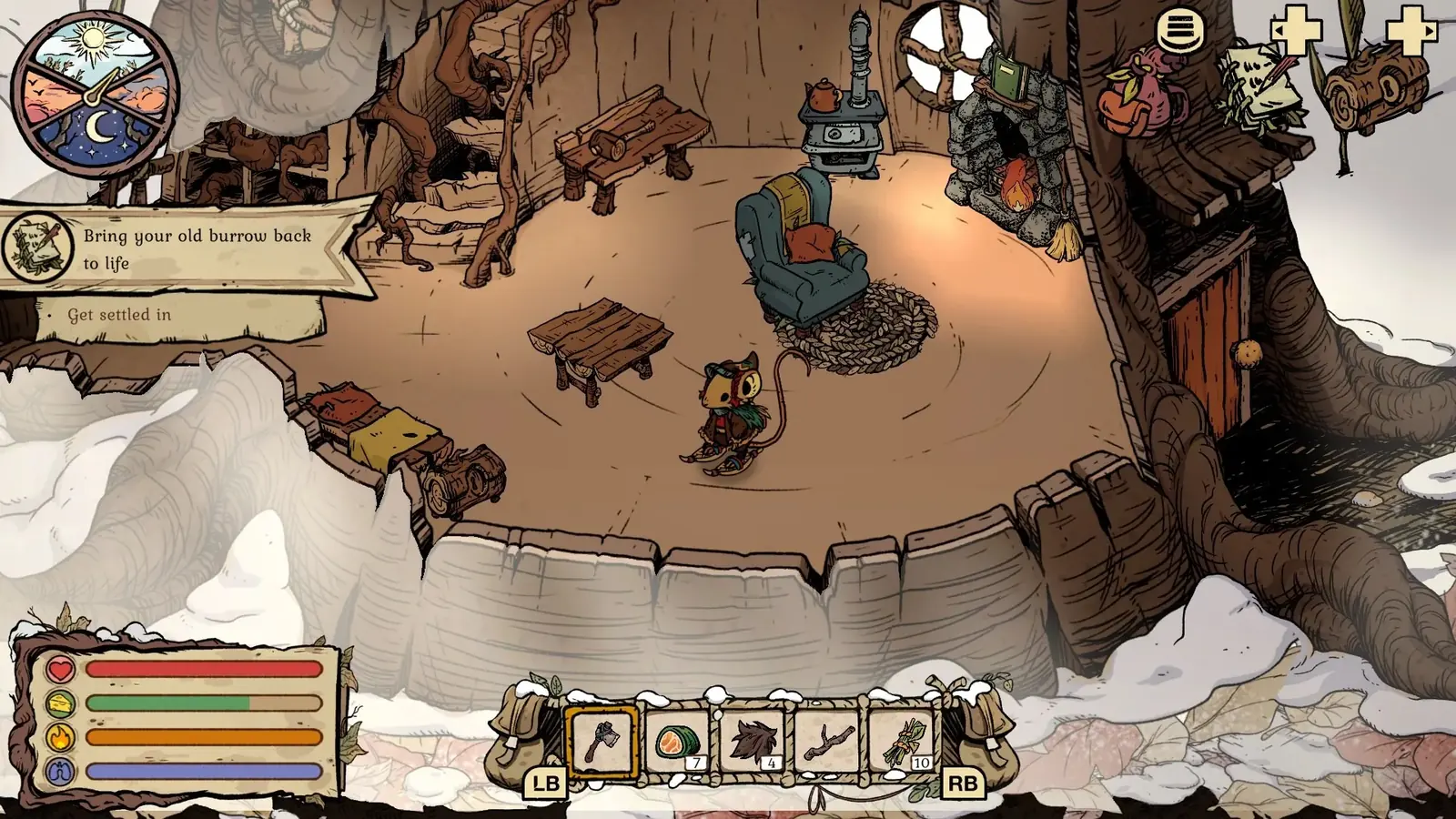
Your burrow is the progression menu. The workbench turns gathered materials into route tools and furniture. The stove turns random berries and mushrooms into repeatable route safety. The armchair turns yarn and fiber into permanent warmth. Storage turns chaotic pickups into a plan. Every time a route blocks you, return home and check which station has changed. This is the first habit to teach because it prevents the most common error: wandering for a new item when the answer is a repair you already postponed. Repairing the right station often matters more than finding a larger region.
Storage: keeps rare route materials out of accidental decor crafts.
Unlock checkpoint: the burrow itself is the progression board. Recheck stations whenever a route object refuses to move.
03
Guide Step
Cooking Unlocks: Food Solves Time, Tea Solves Weather
Cooking is not just a cozy side system. It is route math. Pies handle hunger decay over longer walks. Tea and hot foods handle cold spikes, night, storms, and outdoor NPC conversations. Players often fail because they pack one kind of safety and forget the other. The stove unlock should be explained with two questions: how long is the route, and how cold is the route? If the route is long but clear, pie matters. If the route is short but stormy, tea matters. If the route includes a long chat with Moss, Bufo, Willow, or Aunty outdoors, drink before the dialogue starts. That single habit prevents several "bug" reports that are really cold continuing during conversation.
04
Guide Step
Knitting Unlocks: Permanent Warmth Before Consumables
Knitting is the cleanest example of Winter Burrow progression hiding inside a cozy activity. The armchair unlock changes every future route because clothing lowers how much emergency supply you need. Torso pieces should come first because they affect the whole run; hats, gloves, and scarves follow when material supply is steady. A player who keeps spending herbs on tea but ignores knitting will feel trapped in a loop of preparation. Upgrade clothing when the same route repeatedly consumes emergency drinks, especially on the Moss path, Granite loops, the Pollywog route, or the Willow thicket.
05
Guide Step
Axe Unlocks: Vines, Combat Comfort, and Shadow Pines
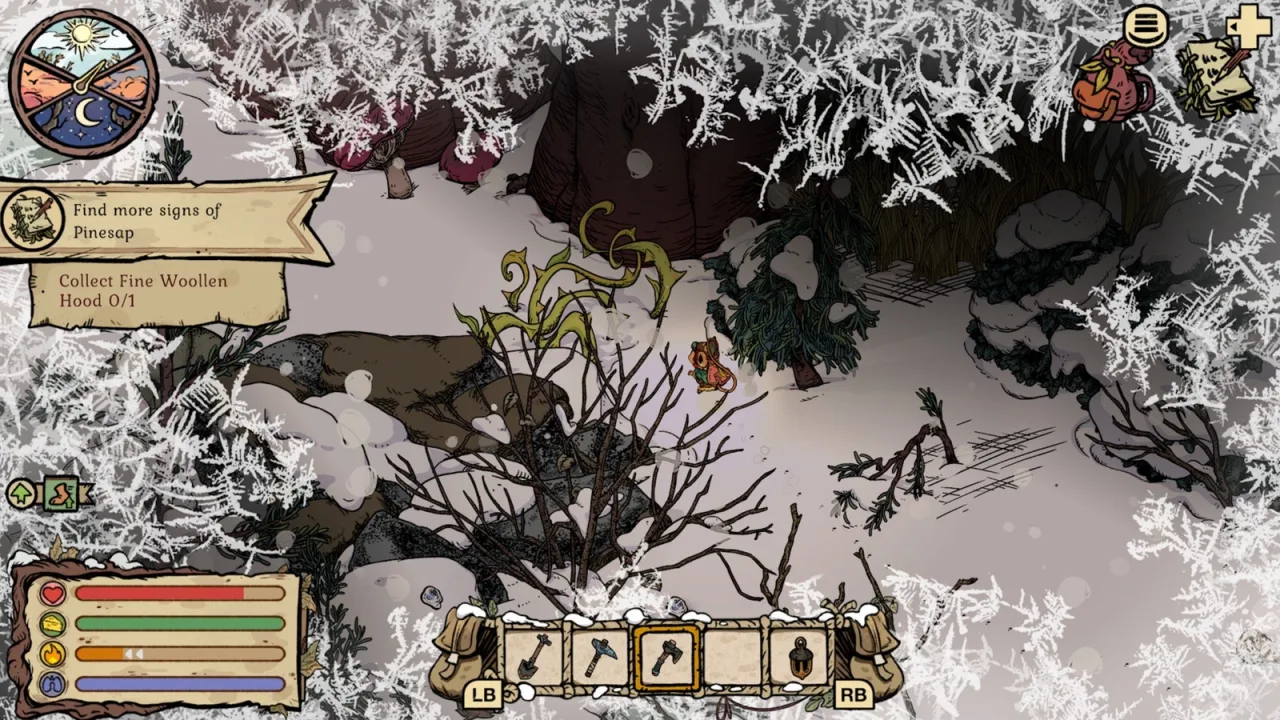
Axe progression should be explained by visible gates. If vines do not cut, do not keep testing the same screen from another angle; verify the equipped tool name and finish the relevant story unlock. The Fine Woollen Hood route gives a reliable check: begin at the Heavy Key skull, leave left, use the Flint Axe on the north-west vines, reach the abandoned caravan and fire, then cut the thick southern thorns. The final Pinesap stage is separate and uses the Flint Pickaxe on boulders left of the hood clearing. Naming both tools and both task states is more useful than a generic instruction to bring an upgraded tool.
Verified axe gate: the Fine Woollen Hood route uses the Flint Axe on these green vines. Image credit: Eurogamer/Pine Creek Games.
06
Guide Step
Pickaxe Unlocks: Stone First, Granite Later
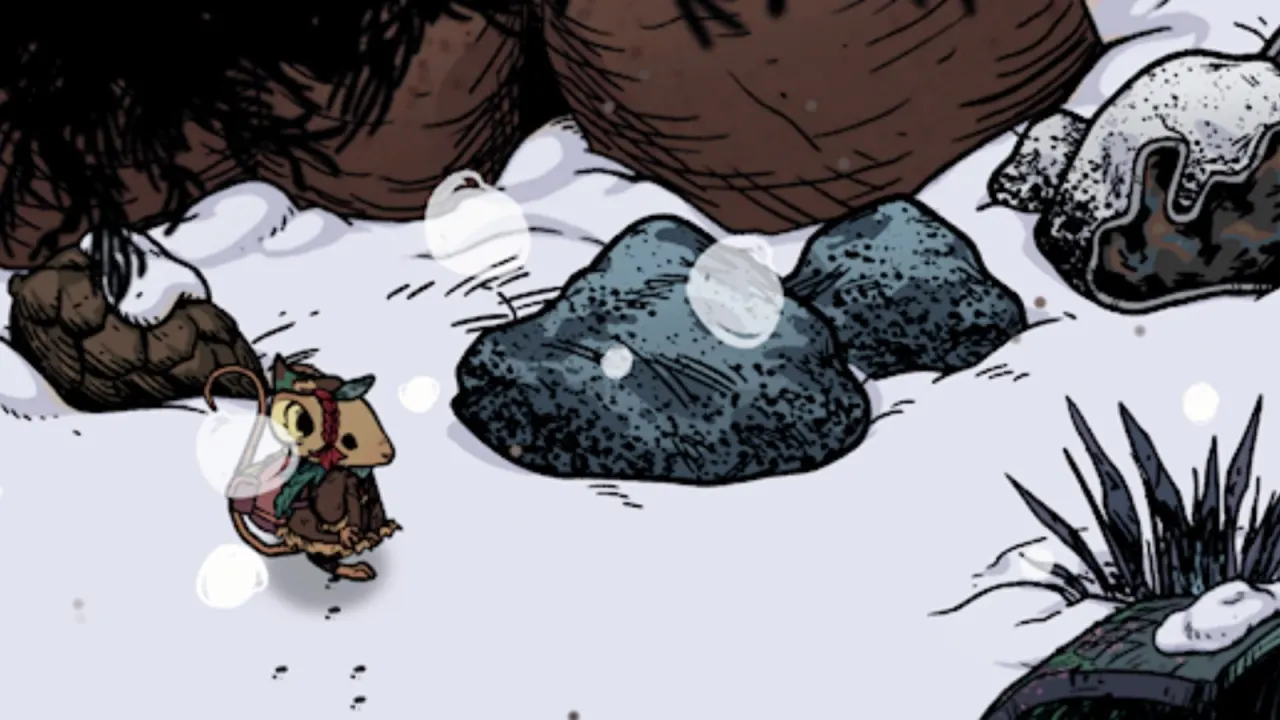
Pickaxe gating causes the strongest softlock feeling because the game can ask for Granite before the player understands loose pickups. Teach the exact sequence: bring Bufo 5 Pebbles and 2 Twigs to receive the Sandstone Pickaxe, collect one loose Granite by hand, finish An Axe for Bufo, then craft the Granite Pickaxe with 1 Granite, 1 Wool Yarn, 1 Pinewood and 1 Oak Wood. That stronger tool clears the Granite boulders on the route toward Pollywog. If the boulder does not react, the answer is not to search for a hidden angle; verify that the equipped item is the Granite Pickaxe and that Bufo's recipe step was completed.
Verified Pickaxe gate: these dark Granite boulders require the crafted Granite Pickaxe, not the first Sandstone tier. Image credit: Eurogamer/Pine Creek Games.
07
Guide Step
Shovel, Tunnels, and Willow
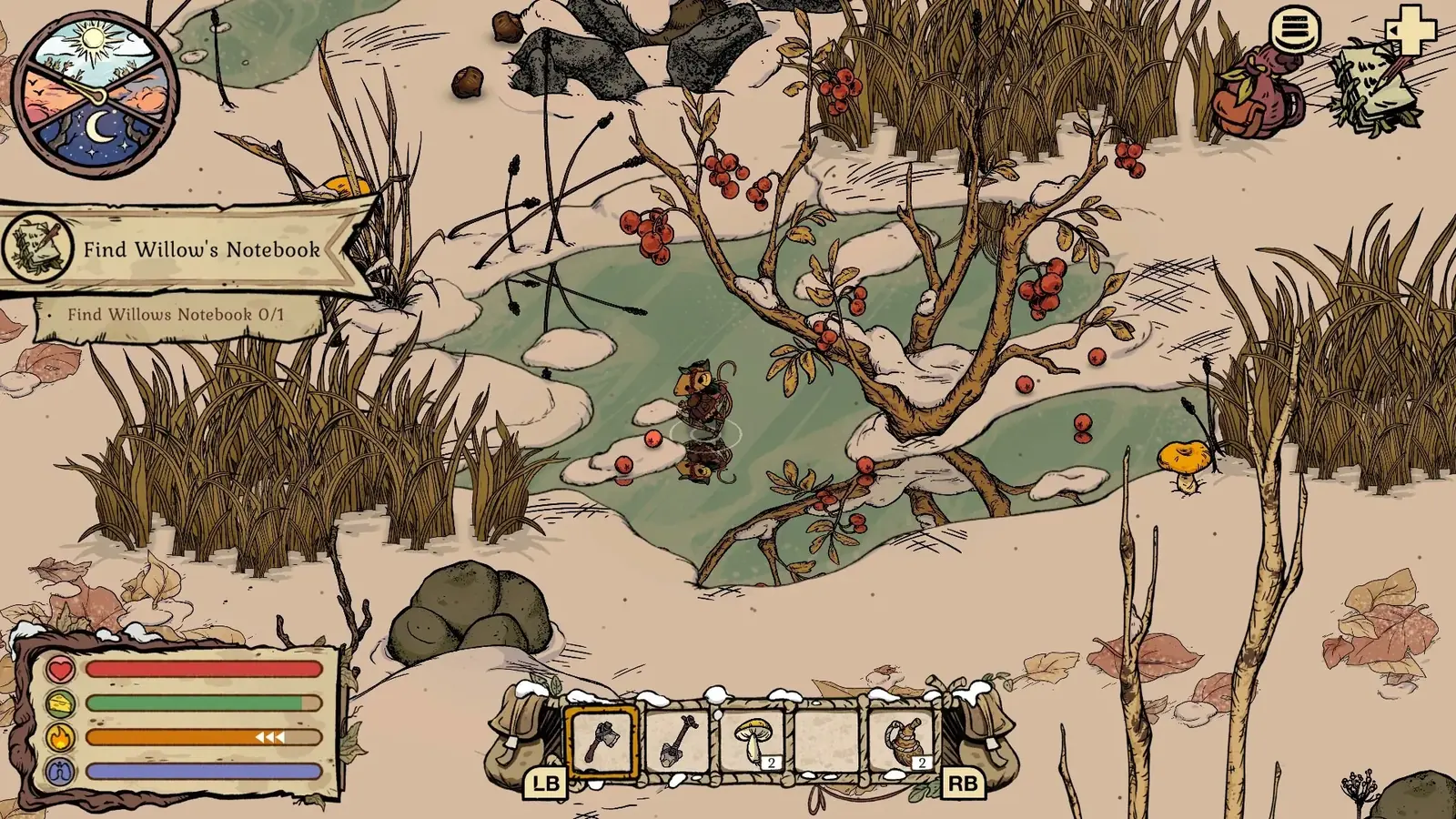
The shovel and tunnel state are important for late-game completion. Willow-related progression can feel like a missing map marker because the next step often sits near home, not deeper in the wild. After returning Willow Notebook, recheck home-adjacent dig points and tunnel entrances. The unlock changes how you think about distance: not every late quest means walking farther. Sometimes the game opens a shortcut, then expects you to connect two familiar places. Confirm the crafted shovel, inspect the tunnel immediately after digging, and verify what changed before starting another long route.
Willow progression check: finish the Notebook state before diagnosing later shovel or tunnel prompts. Gameplay screenshot via Into Indie Games; source route linked in the Willow guides.
08
Guide Step
Backpack and Inventory: The Quiet Ability
Inventory size is an ability even if the UI does not frame it that way. Granite, furniture materials, and achievement cleanup all become easier when you stop carrying "just in case" items. Before a heavy loop, keep supply slots, the required tool, and enough empty space for the target. Upgrade backpack capacity before long mining goals where possible. If Granite seems scarce, check whether the route is actually scarce or whether the bag fills before the second confirmed boulder. Use the tracker below to match item category, source, prerequisite, route, and screenshot without mixing unrelated goals into the same run.
09
Guide Step
How to Use the Tracker
Use the progression tracker by symptom. Blocked by vines means axe. Blocked by rock means pickaxe. Cold during dialogue means warmth preparation. Too few slots means backpack or storage discipline. A missing furniture achievement means material-family and menu checks. A Moss objective that will not close means the chain still has another hand-in or dialogue step. Start with the exact way the game is blocking you, then use the tracker to translate that symptom into the next action.
Tool
Skill / Progression Tracker
Winter Burrow progression is not a fake RPG skill tree. Use this to match blocked routes to real unlock states.
Workbench and Tool Crafting
Crafting
Turns gathered resources into axes, pickaxes, furniture pieces, and route tools.
Stove and Baking
Cooking
Converts berries, mushrooms, herbs, and water into route-length supplies.
Armchair and Knitting
Knitting
Adds permanent warmth planning through sweaters, hats, gloves, and scarves.
Campfire Safety
Survival
Allows safer night/storm exploration and dialogue recovery.
Pickaxe Gate Reading
Exploration
Mines Granite boulders and clears Granite route blockers; loose Granite still uses the normal pickup action.
Axe Gate Reading
Exploration
Opens vine paths around Moss, Gnawtusk, and Pinesap.
Shovel and Willow Tunnel
Exploration
Connects home-side shortcuts and late quest access.
Inventory Discipline
Inventory
Makes Granite, furniture, and achievement cleanup much less painful.
Separate Storage Audit
Inventory
Turns home storage into a material-routing system instead of one invisible catch-all box.
Tidy Up Backpack Baseline
Inventory
Makes short routes less punishing, but only if the player stops carrying mixed clutter.
Furniture Stat Progression
Crafting
Moves furniture from cosmetic-only cleanup into permanent progression planning.
Mole Tunnel Fast Travel
Exploration
Reduces repeated return walks after successful routes and heavy hauls.
Story and Challenge Modes
Survival
Lets players lower friction for story cleanup or raise pressure for route planning.
Three Save Slots
Survival
Allows old-save protection, second-player files, mode tests, and seasonal experiments.